Thursday, December 16, 2010
developmental stages
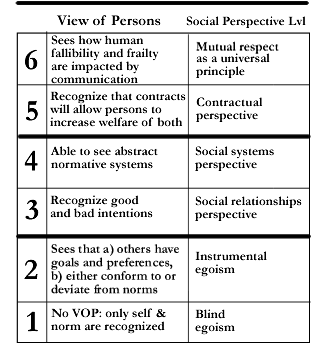
Today is Thursday and thank goodness tomorrow is Friday because I could not stick through another 90 minutes of powerpoints with Mr. Dreier. We're learning about Kohlberg's stages of moral development, and it's sort of interesting. As you can see from the visual, there are six stages of moral development according to Kohlberg. I was assigned to study stage 1, which is the youngest stage. Kids in this stage typically are blind to consequences of their decision and base their decisions solely on obedience and punishment. They do whatever they believe won't get them in trouble. So if that means lying to your parents so that they don't find out about something bad, then you must lie. The last stage is stage 6 and that is where high school kids should probably be. This stage is basically the most mature and balanced. Kids will weigh their options and read into the decision making a lot more than people who are in stage one of moral development. Stage 6'ers will reverse the situation. Basically they can see it from more than just their point of view, so they will assess the situation from the opposing person and maybe a higher figure such as a parent. That's about all. "outskies for now!!!"

brain disorders
This post was due last week, but I'm posting it now with high hopes that I will get credit from Mr. Dreier so let's hope he's in a good mood at this moment. I only got to see the brain disorders that were presented on Thursday but a certain brain disorder caught my attention which was savant syndrome. Ironically enough, I met a savant on Friday when I was visiting Oshkosh. The guy was quite old and he was a professor at the university. He wasn't as special as the class examples we heard about, but his memory was by and far above average. One of the guys that I was with asked the professor if he remembered the day that they met, and the professor rattled off the exact date. He wasn't special enough to remember the weather or anything like that, but it was still pretty spectacular to witness something like that where the man could just remember the exact day off the top of his head. This disorder intrigued me so I set out to find more information on it. After looking it up online for a bit, I read many peoples opinions and some people think that almost everybody is born with the abilities of a person with savant syndrome. I think that there's some truth to that because everybody probably has the ability to find that inner ability of the savant syndrome, we just don't spend our time trying to accomplish it. That's all I got. "outskies for now!!!"
Friday, December 3, 2010
left brain right brain
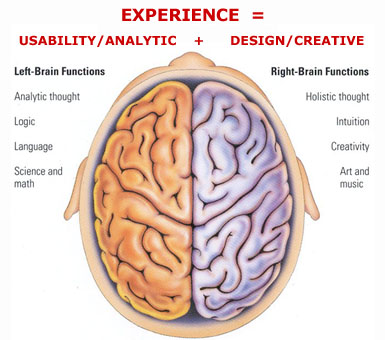
There are quite big differences between the left brain and the right brain. During the class testing I scored a 5.29 which set me as a right brained person. Dreier predicted that I would be a left brained person, but he was wrong of course. Being right brained means you obtain characteristics of being creative, artistic, intuitive, random, and a risk taker. I found through information that I found on the internet that most school's teaching approaches tend to favor left brained people, so it is harder for right brained people to succeed in school. Left brained people are more logical, mathematical, rational, subjective, and orderly. Left brainers can look more into one part of a situation, whereas the right brained people tend to look at the big picture of the situation.
Friday, November 19, 2010
Jung, Adler, Horney.
Today we were assigned to research three people...Carl Jung, Alfred Adler, and Karen Horney. I first studied Jung because Dreier had a "Forever Jung" shirt on, probably because he thinks that it's funny. I came to find that Jung had input on the collective unconscious archetypes and was quite the interesting man. Jung worked with schizophrenic people and based his thoughts off of those people. He thought about archetypes and how they relate to the collective unconscious because they're psychic and innate behaviors to show basic human behavior. The most important archetype was the "self" and that is because it is the center of the psychic person. The next person that I looked up was Karen Horney, and I found that she dealt with women V. men and psychoanalysis. She questioned Freud's views on psychology and set out to show her beliefs. In her psychoanalytical social theory, she determined that people who don't feel loved tend to have basic anxiety and will have more of a tendency to either move close to people, move away from people, or move against people. Her women V. men research basically was a point to prove against Freud. She wanted to prove that yes, maybe certain women have penis envy, however; men also can have vagina or womb envy. She set out to prove that men were jealous of women as well, because they felt the desire to bear a child as well. She almost completely disagreed with Freud's views and how much emphasis he put on the male reproductive organs, while basically ignoring the female persona. The last person I had to study was Alfred Adler. Alfred not only had a beautiful name, but also had some great viewpoints. He was said to believe that children go through a phase of inferiority, where they believe they're inferior or above everything else. He thought that as the kids grow up, they find out that they're not inferior, so they continue to strive for power and recognition in order to try and reach this comfortable level of inferiority in our lives. That's all I've got, "Outskies for now!!!"
Thursday, November 18, 2010
unethical psychology experiments.
Unethical psychology experiments are very interesting to learn about. I didn't realize that there were so many qualifications to a psychology experiment. In order to better understand the consequences of an unethical psychology experiment, we should try one out on Mr. Dreier so that way we can see how he reacts. It was most interesting to me to see the video in class that demonstrated the Milgram Experiment. The experiment was an extreme example of unethical experiments because it demonstrated breaking guidelines such as consent, deception, withdrawal, and definately protection. During psychological experiments, people are supposed to be guaranteed of protection from both physical and mental harm during the process, and the Milgram Experiment obviously harmed the participants mentally. The people were very distraught and uneasy about harming the other participant, so that definately broke the rule of protection for mental harm. Potential participants are supposed to be told about how they can withdraw from the experiment at any time that they want, but in the Milgram Experiment the professor was certainly pushing the participants to finish the experiment by saying "You must continue, it is essential to the experiment to continue." People are supposed to be allowed to withdraw in case they have any feelings of doubt or uneasiness. Lastly, the contestant is supposed to be given consent to all of the FULL understanding of the objectives of the research. The contestants in this experiment were'nt given a full understanding because they were not told that the shocks that they were supposedly giving the the other constestant would actually be lethal, had they been actual shocks. The experiment is just one classic example of all the unethical things that can go on during a psychological experiment. Well I better get going, "outskies for now!!!"
Tuesday, November 16, 2010
I love to run slower than brady.
I don't run fast. Well, not compared to all of the other guys on the team. Cal thinks that I am really slow too. I hope I run faster in the future. I'll practice by sitting on the couch. Well outskies for now!!!
Subscribe to:
Comments (Atom)